What to expect at Ha Giang’s 80m deep Meo Vac Sinkhole. Essential tips on safety, guide booking, weather conditions, and whether it deserves a slot on your trip.
Meo Vac Sinkhole is a natural shaft about 80 meters deep on a pine-covered hillside in Ha Giang Province, 2 to 3 km outside the district town and near the northernmost tip of Vietnam.
You will not find a ticket booth or a railing there, and the floor can only be reached with ropes, so most visitors settle for the rim. A half day from town is enough, and a driver and a guide who know the hillside make the stop far smoother.
1. Should you visit Meo Vac Sinkhole?
That depends on what you want from the stop. At Meo Vac Sinkhole you see a ring of pines, a dark drop and a lot of leaves. The floor stays hidden, so the photos that circulate online come from climbers who rappelled in, not from people standing at the edge. If you like geology, or you enjoy standing beside a drop that is hard to measure by eye, the half day will feel well spent.
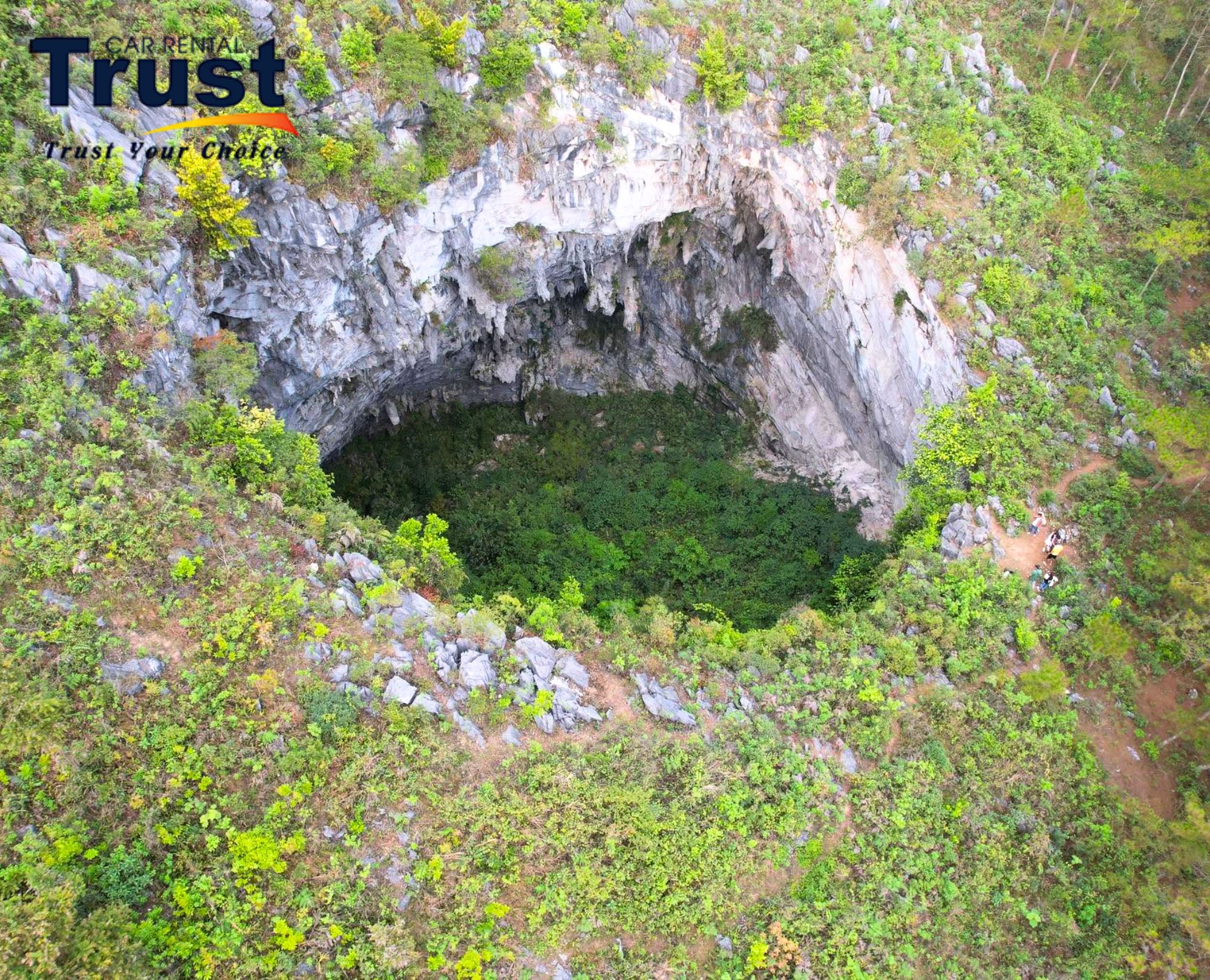
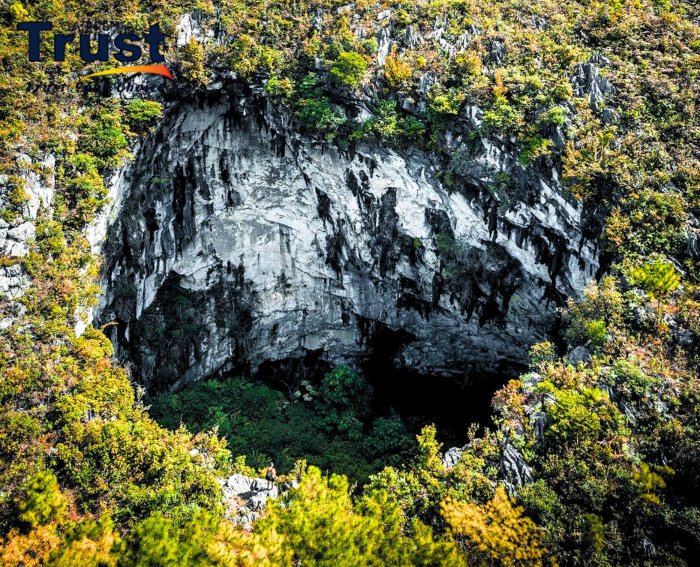
Aerial view of Meo Vac Sinkhole accessible within half a day from Meo Vac district town
Our own rule is simple. The hole earns a slot in your itinerary when three things line up: dry weather, at least half a day free in the district town, and no expectation of a viewing platform. If one of those is missing, the same hours are better spent on Ma Pi Leng Pass or the Sunday market, which need no preparation at all.
2. About the Meo Vac Sinkhole
2.1 How it was found
A guide named Giap Van Hai spotted the entrance in 2021. He was going through satellite maps with colleagues and flying a drone over the hills outside the district town when an opening appeared where none was expected. Hai had worked in the area for years and had never seen a hint of it. Once the first post went online, the hole drew attention from riders and bloggers across the highlands.
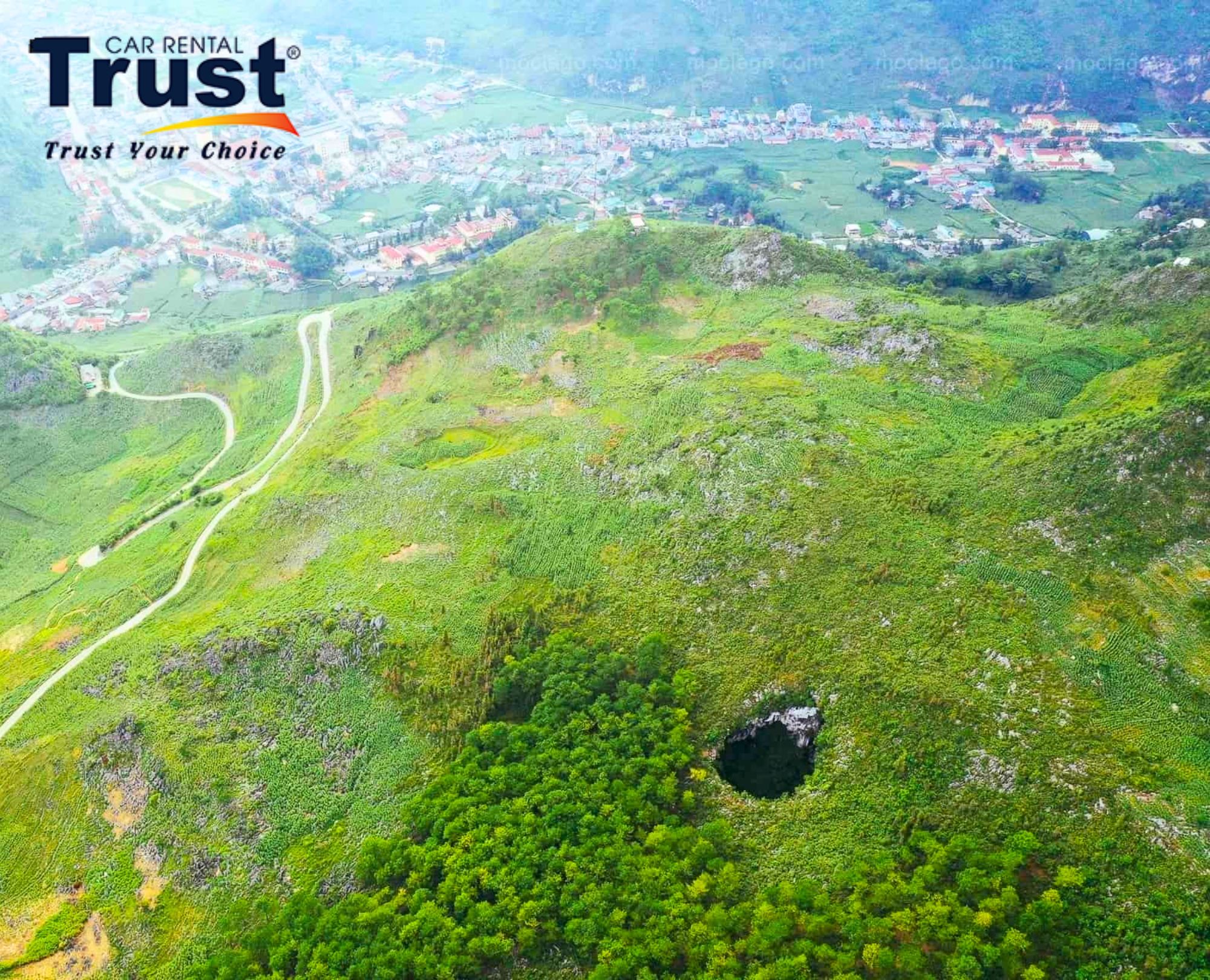
Top down view of the unique natural sinkhole nestled in the karst landscape of Meo Vac
Nobody can tell you when it formed. Villagers have no record of the ground giving way, so neither a date nor a cause has been confirmed.
2.2 Other names you may see
Maps and social media use several names for the same hole. The plain description in Vietnamese is Hố sụt Mèo Vạc, a collapsed hole in the district. Sky Well is the nickname that fits best, because from the floor the sky shrinks to a disc the size of the opening, and Vietnamese readers know it as Giếng trời Hà Giang.
Death Sinkhole is the loudest nickname, yet no recorded accident at this hole has turned up in our research, and the name seems to come from how dramatic the drop looks in photos.
2.3 How it formed
The Meo Vac Sinkhole sits in limestone that belongs to the Dong Van Karst Plateau, a region recognized as a UNESCO Global Geopark. The rocky plateau drains rain straight underground, and over thousands of years the water enlarges cracks into shafts and caverns.
Once a cavern roof gets too thin, it collapses and leaves an open pit with steep sides. Chinese geologists call the largest collapses tiankeng, roughly heavenly pit, which echoes the Sky Well nickname.
Pines surround the rim today, and farmers cut grass on the slope above for their cattle, so you share the hillside with working villagers.
3. How to see it
3.1 From the rim
Most visitors stop here, and it is the option we recommend. The approach to the edge follows paths that villagers use, and your guide picks the safest viewing spots. Tree crowns fill the opening and the floor stays out of sight, so the experience is about scale and setting more than about a clear view down.
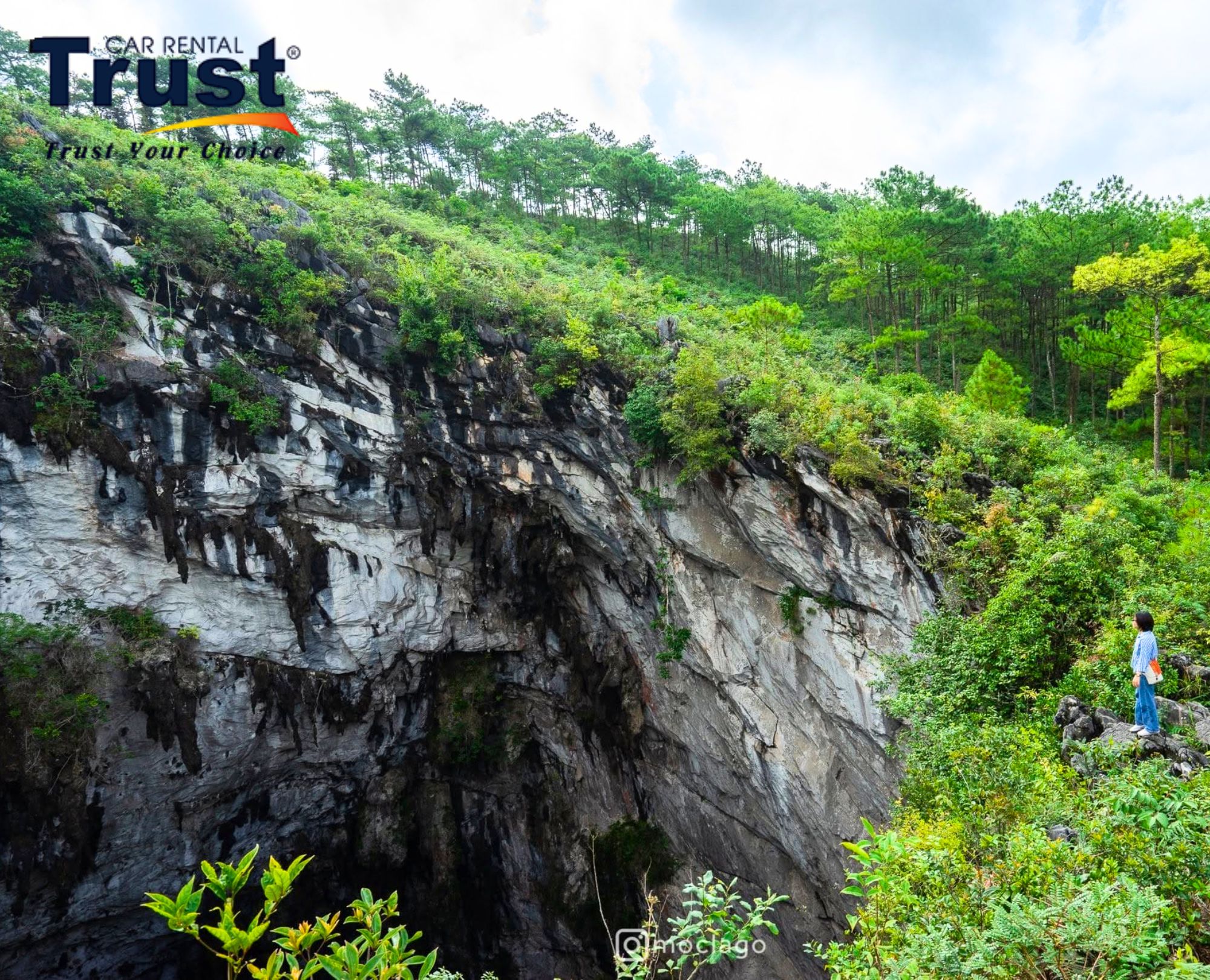
Standing on the rim of Meo Vac Sinkhole for scenic landscape views
A few small habits improve the photos. Overhead light usually reaches further into an opening than low morning or evening light, and a wide lens helps with the trees. A phone held at arm’s length over the drop is not worth the risk, and your guide will tell you the same.
3.2 By rope
A descent is a different undertaking altogether. In a 2022 video, tour guide Hai goes down a sheer and rugged cliff to the bottom of the drop, with two local men leading the way. His team rigged safety ropes on a rock wall where no human trail existed, and it took several hours to reach the floor.
Ferns cover much of the ground down there, and the thick growth gives the base a prehistoric look. Hai said he felt tiny next to the scale of the hole, with the sky reduced to the size of the opening above.
One group, led by a visitor named Minh Quang, went further and strung two ziplines across the mouth. They used about 300 meters of static rope for the ziplines, the anchors and the lines for going up and down, and the rigging alone took four to five hours.
Hai thinks adventurous visitors can manage the descent with the right gear, but he also warns that you need full protective equipment and experienced company. We would add that rope work at this scale belongs to specialists.
3.3 How much time you need
A rim visit fits into half a day, including the short transfer from town. A rope descent needs a day of its own, since rigging and the climb out already use most of the daylight. The two cannot share a single afternoon, so decide on one before the trip starts.
3.4 How to pick a guide
For Meo Vac Sinkhole visit, any guide who has stood at the edge recently will do, as long as they know where the ground is firm and where it is not. A short question before booking helps: when did you last go up there, and what was the condition of the approach? A confident, specific answer is a good sign. A vague one suggests the guide is relying on old information, and the hillside changes with the weather.
For a rope descent, the bar is much higher. You need a specialist team with its own equipment, anchors and a rescue plan, and the team should be able to explain each of those without hesitation.
4. How to get there
4.1 How to reach the starting city
The loop begins in Ha Giang City, about 300 km from Hanoi. We suggest covering that leg the day before, so your first loop day starts early and not with a long highway transfer.
4.2 From the city to the district town
From the city, National Highway 4C climbs north through Quan Ba and Yen Minh, reaches the old-quarter town to the west of the district, and then crosses Ma Pi Leng Pass. The pass is about 20 km long with a crest near 1,200 m, and it ends at the district town. The whole run from the city is 150 to 160 km, roughly six hours by car, and extra time for photos is realistic.
4.3 From the town to the hole
The final stretch runs through a remote corner of the district, heading toward Khau Vai. Accounts put the hole 2 km out along the Khau Vai road in one place and 3 km in another, so the actual figure likely sits between the two.
A pin from your guide or homestay host is more reliable than typing the name into a map app, because the site has no gate or ticket office. An offline copy helps, since mobile coverage in the mountains can vanish without warning. Since the 2025 administrative merger, the area is run from Tuyen Quang, so some maps may list it under the newer name.
4.4 Car or bike
A car with a licensed driver is the practical choice for most international visitors. The scenic highway is hours of bends; rain arrives quickly, and your luggage stays dry in a trunk. A motorbike offers freedom to stop, but the pass demands mountain riding experience, and riders without it should hire a car for the long legs.
Road conditions change after heavy rain, and the short link from town to the hill may be rougher than the main highway, which your driver or homestay host can check that morning.
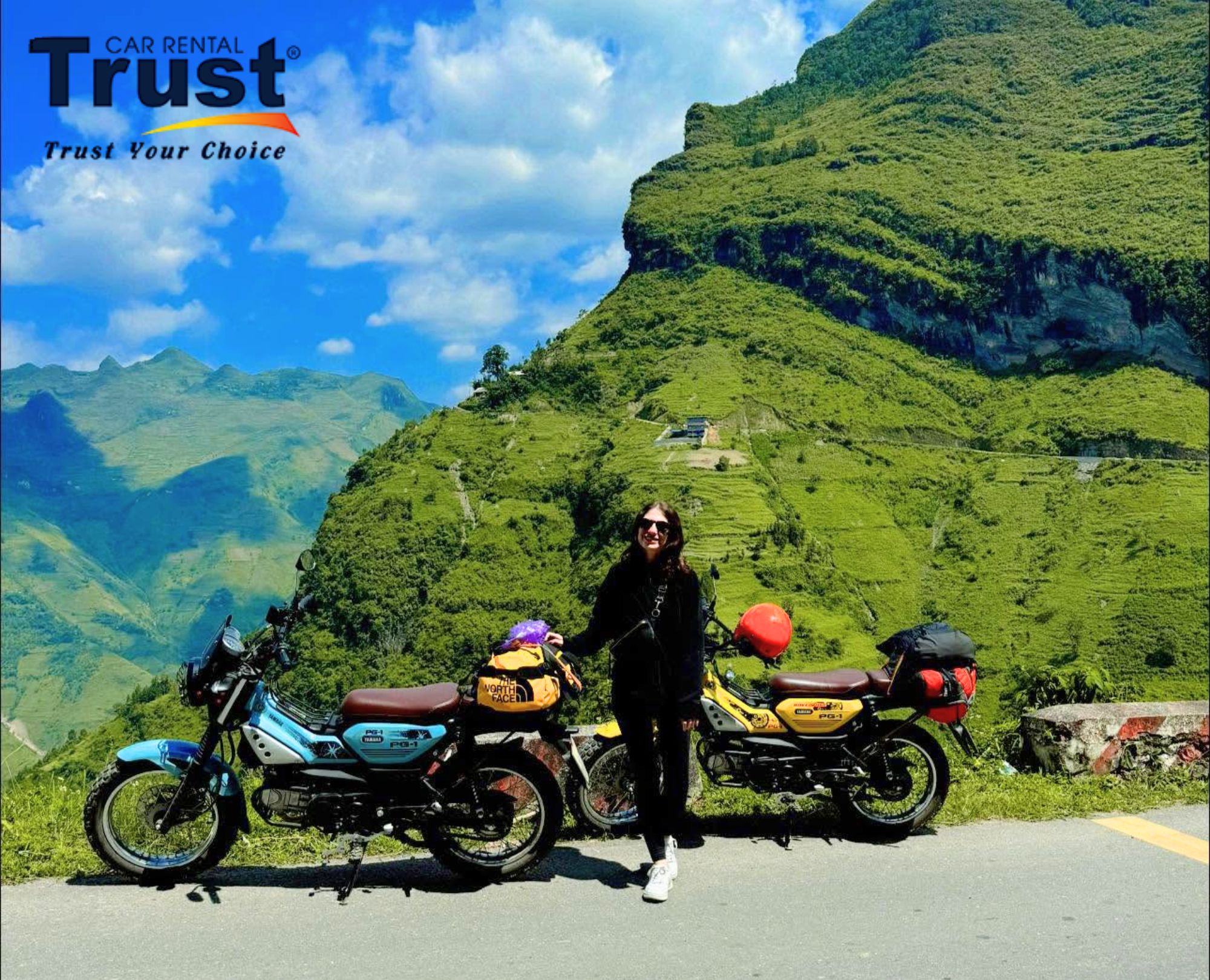
Rent a bike to explore the Meo Vac Sinkhole
5. Safety and rules
5.1 Staying safe at the rim
Loose stone and soil near the edge can give way, and rain makes it worse. You need good shoes with solid grip, a clear distance from the drop and the habit of following your guide’s steps.
Children and anyone uneasy with heights should watch from a spot the guide considers safe. Light fades fast in the mountains, so a late afternoon arrival leaves little margin for the walk out.
5.2 Why you need to be careful
Rescues in these mountains take hours. In April 2023, a young man fell into a hole about 50 meters deep near the Statue of Youth Volunteer in Pai Lung commune, and crews needed more than nine hours to bring him out alive. That was a different hole, but it shows why you should treat any opening here with respect.
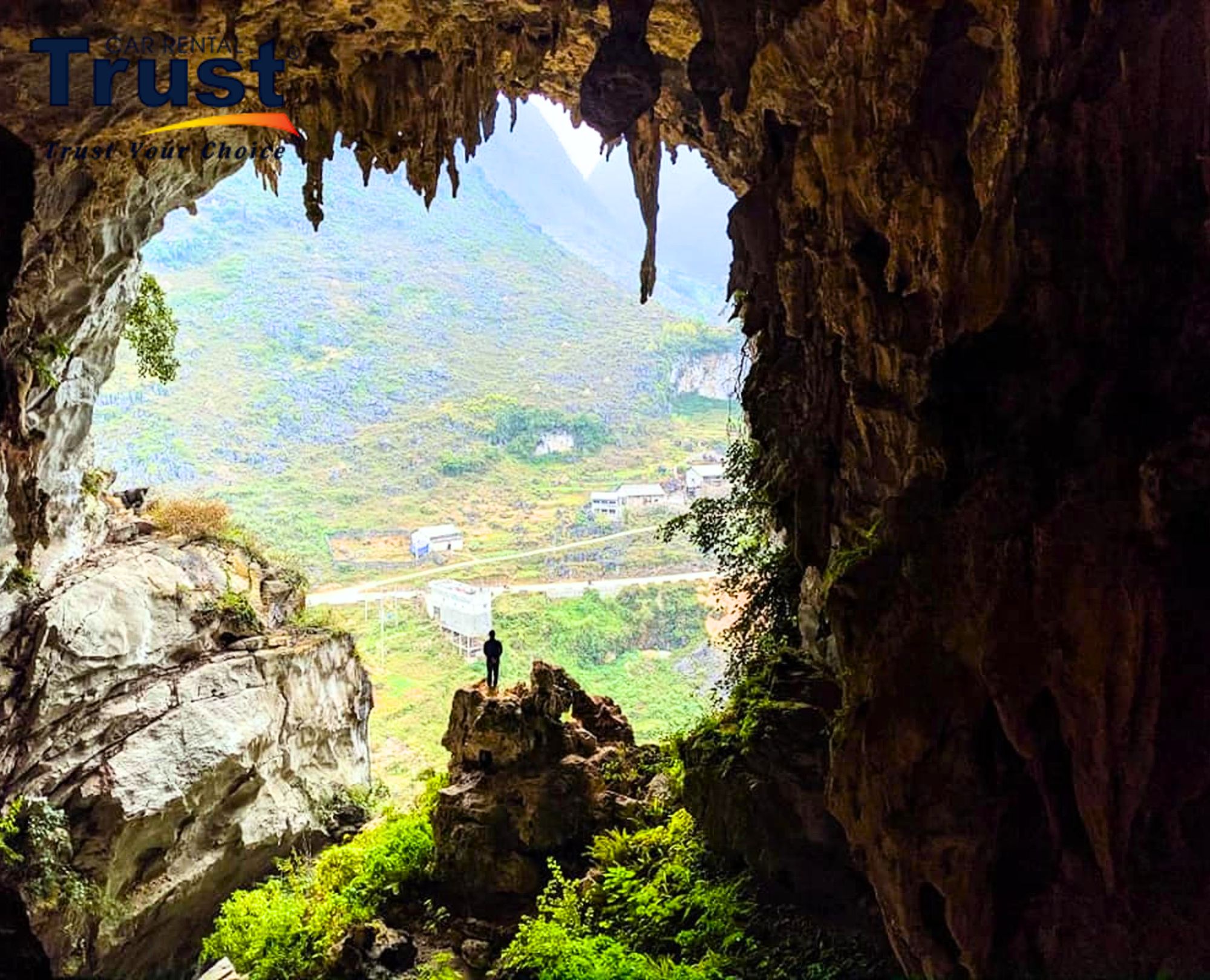
View from inside Meo Vac cave showing sharp rock formations and hazardous terrain for visitors
5.3 Respecting the villagers
The hillside belongs to villagers who cut grass and graze cattle there. Existing paths are the only sensible route, and litter goes back to town in a bag. Drone flights in Vietnam can require authorization, and your guide can explain the current rules before any camera goes up.
5.4 What to check before you go
The Meo Vac Sinkhole was not developed for tourism at the last check in 2023, and we have not found a published entrance fee or fixed opening hours. The hole is not an easy site to visit, and conditions may have shifted since then. Your driver or homestay host can tell you whether any permit, fee or access rule applies on your travel dates.
5.5 Checks on the morning of your visit
Four checks save trouble before the car leaves in the morning: the forecast for the hill, the saved pin, enough water, and a clear word with the driver about the return time. A short chat with your homestay host helps too, since a host often knows whether recent rain has affected the approach.
6. Best time to visit
6.1 Autumn and early winter
Autumn is our pick for a rim visit. Terraced fields turn golden in September as the rice ripens, buckwheat flowers open in October and November, and the skies are generally clearer with drier ground on the hillside. December adds mustard flowers and, in a cold spell, a little snow. The catch is crowds: Tham Ma Pass gets congested on buckwheat weekends, so a weekday departure saves time.
6.2 Late winter and spring
Winter in the northern provinces can be cold and misty, which cuts visibility at the rim and leaves the rock wet. From January to March plum and peach blossom brighten the highlands, and in April the Khau Vai Love Market takes place once a year in the same district. If your dates match that market, book rooms early.
6.3 Summer and the rainy months
Rain falls most often from late spring through summer, and wet ground makes the hillside slippery. Groups that travel in these months should keep the plan flexible and treat any rope activity as a fair-weather option only.
7. Sample itineraries
7.1 Half a day from the district town
This plan assumes a night in town and a rim visit rather than a descent. Times will shift with weather and group pace.
Breakfast at 07:30 gives you a proper meal before a day with steep ground and no food on the hillside. At 08:30 the driver loads water, rain jackets and the offline pin. On a Sunday, the central market is open in the morning, and an hour among the stalls fits before the main outing.
The transfer starts at 09:30 and covers 2 to 3 km, then you walk the last part with the guide. By 10:00 the rim comes into view, and the next hour is spent taking photographs from safe positions and taking a look at the hillside. Light matters more than long exposures here, because the opening hides its floor under trees.
Lunch at 12:30 in town leaves time to rest. A boat ride on the Nho Que River at 14:00 makes a calmer second stop, with a slow drive along Ma Pi Leng Pass as the alternative. Back at the hotel by 16:30, you stay clear of dusk, and dinner at 18:30 closes the day.
7.2 Three days on the loop
On day one the car leaves the starting city at 07:30, stops for coffee in Quan Ba around 09:30 and breaks for lunch in Yen Minh at 12:00. The old-quarter town comes at about 16:30, in time for a walk before dinner.
Day two starts earlier. Breakfast at 07:00 leads to Ma Pi Leng Pass by 09:00, with photo stops along the crest, and the district town around 10:30. After lunch, you head to the hill at 13:30 and have until 15:30 at the rim. The remaining afternoon goes to the river or to a rest.
Day three is mostly driving. Departure at 08:00 puts you back in the starting city around 14:30, depending on stops. A fourth day, if you have one, belongs in the district town, where it gives room for rain, a slower market morning or a separate rope day.
7.3 If it rains
A wet morning does not have to wreck the day. The hillside turns slippery, so the Meo Vac Sinkhole visit is better delayed, and the pass, the river and the market all work as indoor-friendly or short-exposure substitutes. If the forecast clears by early afternoon, a late visit is possible, but only when the guide agrees that the ground has drained enough and daylight allows a safe walk out.
8. What to bring
Shoes come first. Closed pairs with deep tread handle the hillside much better than sandals or smooth-soled sneakers, and ankle support helps on uneven ground. A light rain jacket packs small and covers sudden showers, and a warm layer is useful in the shade of the pines.
Water for the outing comes from town, since the hillside has no facilities. A power bank keeps your phone alive for the offline pin and photos, and sun protection, insect repellent and a small first-aid kit complete the bag.
Small notes are handy in the district town, where some shops may not take cards. If you plan a rope activity, use the gear supplied by the specialist team instead of buying equipment on the way.
9. What else to see nearby
The district packs in several stops that pair well with the hole. Ma Pi Leng Pass is the legendary highlight of the highway, with the Nho Que River far below the crest. The pass counts among the four great passes of the north, with nine sharp bends and, in places, a drop on one side and a surface barely wide enough for one car. A boat ride on the river is one of the area's most recommended activities, and it offers a calm contrast to the drive.
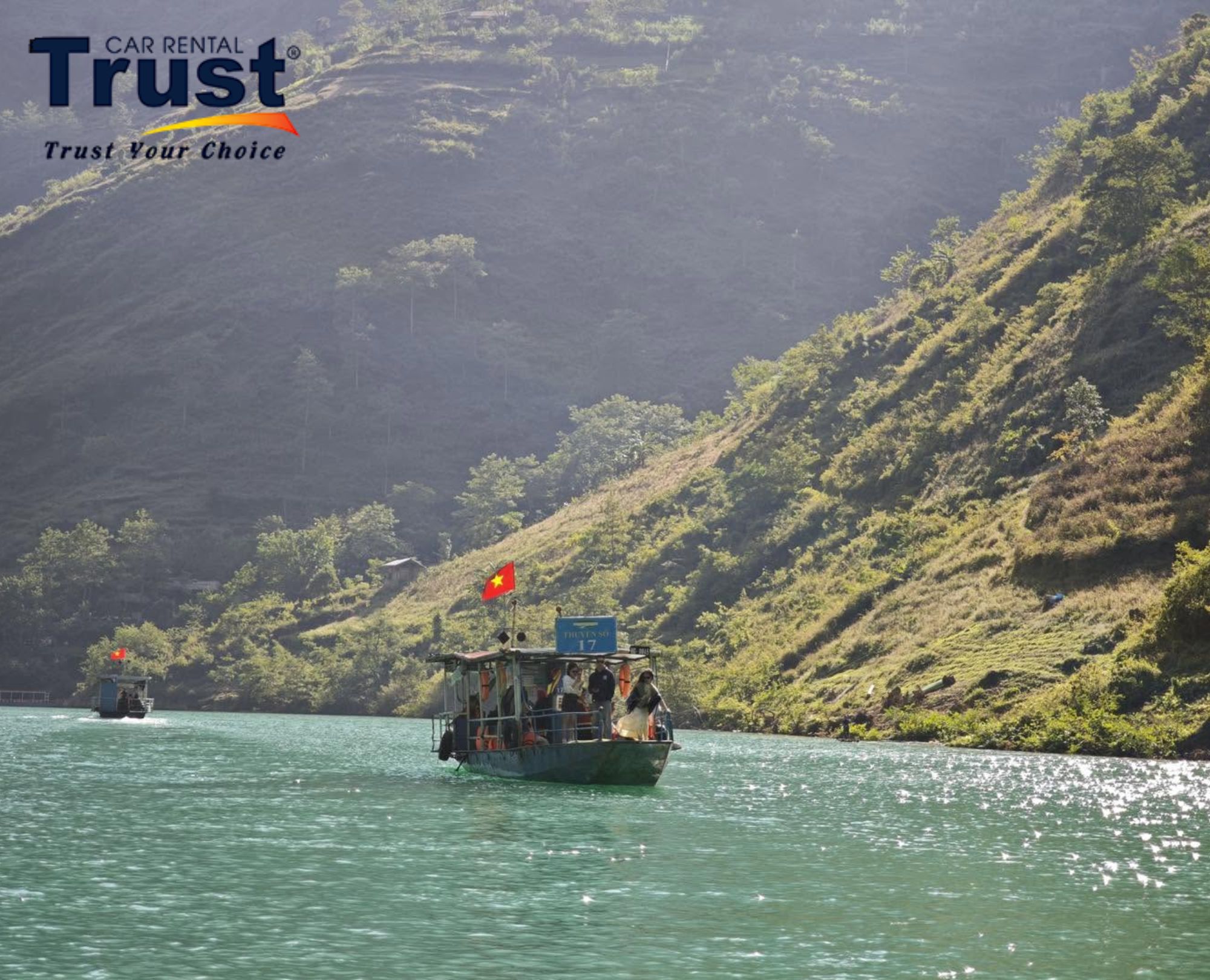
Nho Que River boat tour as a popular nearby attraction when visiting Meo Vac
The central market in town runs on Sunday mornings and is widely described as the largest in the area, with highland produce, livestock and specialty dishes on sale. Khau Vai commune lies in the same district, and the Tu San canyon, called the deepest in Southeast Asia, sits close to the pass. Cao Bang lies to the east, so with extra days you can explore further along the highlands on a longer loop.
10. How to book a driver and guide
A smooth trip depends on a few details that are quick to check before paying. The vehicle should be inspected and insured, the driver should hold the right license and know the route, and the schedule should include buffers for weather and traffic.
Cancellation terms should be in writing, and it's worth asking for a named contact for the day of the trip. One more question matters here: a company that promises a quick rope trip to the floor without a specialist team, proper anchors and a rescue plan is promising something the terrain does not allow.
Vietnam Trust Car Rental arranges private cars with licensed drivers for routes in the north and can build the district town stop into a full Ha Giang Loop. The stop works best early in the schedule, because it protects the daylight hours at the hill and avoids a rushed arrival.
11. Common questions
11.1 Where is the Meo Vac Sinkhole?
On a pine-covered hill above Tia Chi Dua hamlet in Giang Chu Phin commune, 2 to 3 km from the district town toward Khau Vai.
11.2 How deep is Meo Vac Sinkhole?
About 80 meters, a figure taken from the 2022 video. No official survey has been published that we know of.
11.3 Is there an entrance fee?
None has been published as of 2023, and the same goes for opening hours. Your driver or operator can confirm the current situation.
11.4 Can beginners go down?
No. The rock face has no trail, the drop is about 80 meters, and the work needs trained rope specialists.
11.5 Is it good for kids?
The Meo Vac Sinkhole visit can work for older children who stay beside an adult at all times. The edge has loose ground and no barrier, so younger ones are better off skipping it.
11.6 How long does a visit take?
Half a day covers a rim visit, including the transfer. A rope descent needs a separate day.
11.7 Is it worth the trip?
Meo Vac Sinkhole rewards people who like geology and accept that the rim shows tree crowns instead of the floor. The full view belongs to those who descend with specialists, so most visitors treat it as one stop among several.
11.8 Do you need a guide?
Yes, for practical reasons. The site has no gate or ticket office; the approach follows village paths, and a guide who knows the hillside decides where it is safe to stand.
A dry day, half a day of free time in the district town and a pin sent to your driver the night before are the basics. Good shoes, water and a power bank come next, along with a return time you can keep. With those covered, the hole becomes a short, memorable stop on the Ha Giang Loop, and the pass, the river and the market fill out the rest of the day.
Read more:




 Written feedback
 Send to a friend
 Print
